Trending

Two houses on the same street, both paying for "fibre broadband", can get wildly different service. One streams 4K on three screens without a stutter; the other drops video calls whenever it rains. The difference is rarely the router, the provider or the price. It is the cable.
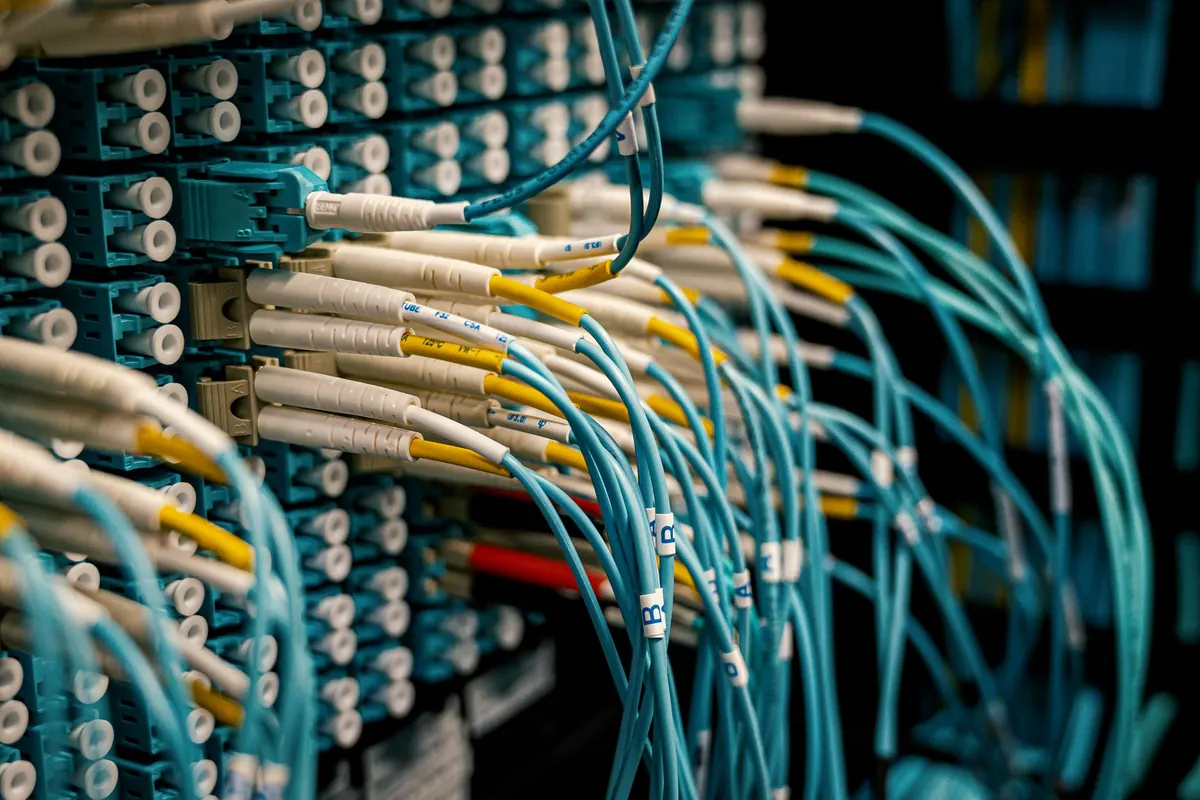
Full fibre, often labelled fibre to the premises (FTTP) or fibre to the home (FTTH), means a strand of glass carries data all the way from the local exchange to a small box on your wall. That box, the optical network terminal, converts pulses of light into the signals your router and devices use.
There is no copper in the path. That matters more than it sounds. Light travelling through glass is not troubled by distance in the way an electrical signal is, it does not pick up interference from nearby power cables, and it does not corrode.
Most UK full-fibre networks are built as passive optical networks. One fibre leaves the exchange and is split, usually in the street, to serve a number of homes. Fewer cables to lay means a lower build cost, which is why full fibre has spread quickly through towns, cities and new-build estates.
Fibre to the cabinet (FTTC) sits behind most "fibre" packages sold in the UK over the past decade. Fibre runs from the exchange to a green cabinet on your street. From there, the signal travels to your home over the existing copper telephone line — the same pair of wires that has carried voice calls for decades.
That final stretch is the bottleneck. Speed falls away with distance from the cabinet, so a home 200 metres away might get a strong connection while one a kilometre away gets a fraction of it. FTTC packages typically advertise "up to 80 Mbps" download and roughly 20 Mbps upload, and plenty of homes see considerably less. Crosstalk between neighbouring lines, damp joints and ageing copper chip away at performance, and faults tend to appear in wet or cold weather.
Headline speeds are the least interesting part of the comparison. What actually changes at home is this.
"I already have fibre." You most likely have fibre to a cabinet. Look at your contract for the words FTTP, full fibre or fibre to the premises.
"Full fibre means a gigabit." It does not have to. Packages range from modest speeds up to multi-gigabit tiers, and choosing a slower full-fibre plan still gives you the consistency and upload benefits.
"It needs a new phone line." It replaces the old one. Voice calls are carried over the broadband connection, which matters as the analogue phone network is retired.
A standard install takes a few hours. An engineer brings fibre from the nearest connection point, often using existing ducting or a telegraph pole, and fits the terminal inside near where the cable enters. You will want a spare plug socket close by, and it is worth deciding now whether that spot suits your wi-fi. A hallway cupboard is a poor home for a router.
Wi-fi is a separate question from your connection. A fast line with a weak router still gives you weak coverage in the back bedroom. If you have thick walls, a long house or a garden office, plan a mesh system or a wired access point at the same time.
Work backwards from what you actually do rather than from the biggest number on offer. Count the people and devices that are busy at once. Decide whether uploading matters to you, because that is where FTTC hurts most. Then check your contract end date, so you are not paying two providers at once or an early exit fee.
If full fibre is live at your address, you are out of contract and your upload speed or reliability frustrates you, switching is a straightforward improvement. If it is not available yet, register your interest with providers, since expressed demand genuinely informs where networks are built next. Where the wait is long, a fixed wireless or mobile home broadband service can bridge the gap — check coverage at your exact address and read the contract terms before committing.
Finally, if you rely on your connection for work, treat the service terms as part of the purchase. Ask what happens during an outage, what compensation applies, and whether the provider offers a business-grade option. The small print is where the real difference between two similar-looking deals usually lives.
Photo: Brett Sayles / Pexels